
World Cities Day: Urban and Regional Planning in a Post-Growth Society
October 29th, 2026
37 mins 20 secs
Season 8
Your Hosts


Tags
About this Episode
This episode marks World Cities Day on October 31st and is released ahead of an online panel discussion that Mark and Michael will present for Healthy Humane Habitats Month, hosted by the New Economy Network Australia (NENA).
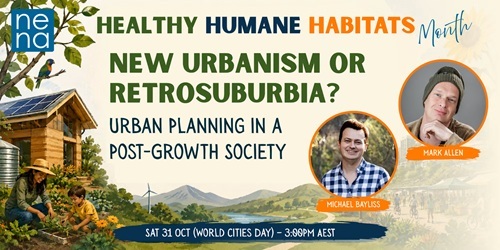
Urban and regional planning is often shaped by the expectation of continued growth: more development, expanding populations, rising consumption and increasing economic activity. But in a world facing ecological limits, resource constraints, climate disruption and the growing impacts of natural disasters, what might planning look like if resilience, regeneration, affordability and quality of life became our priorities instead?
From New Urbanism to Retrosuburbia, Mark and Michael explore some of the assumptions underpinning contemporary urban development and consider alternative possibilities for the future of the places we call home. What would it mean to plan for a post-growth society, where the focus shifts from endless expansion towards creating places that support both human and ecological wellbeing?
Mark also interviewed two residents of an eco-village in Western Australia’s Great Southern, who spoke to the positive of shared living arrangements as an alternative to the atomised urban sprawl which defines most modern-day communities.
The episode draws on ideas from the Retrosuburbia movement, initiated by David Holmgren, co-founder of permaculture. PGAP had the pleasure of interviewing David in an earlier episode, which you can listen to HERE.
This episode also refers to other past episodes of PGAP including:
How Do We Plan for Albany’s Growth - Live at the Albany Public Library
Meet the host of new NENA podcast -Tiyana Jovanovic
PGAP invites listeners to join us for the NENA panel discussion on the 31st of October. We also invite you to encourage your community to host a citizen forum on urban planning. You can also contact us anytime with your feedback.